
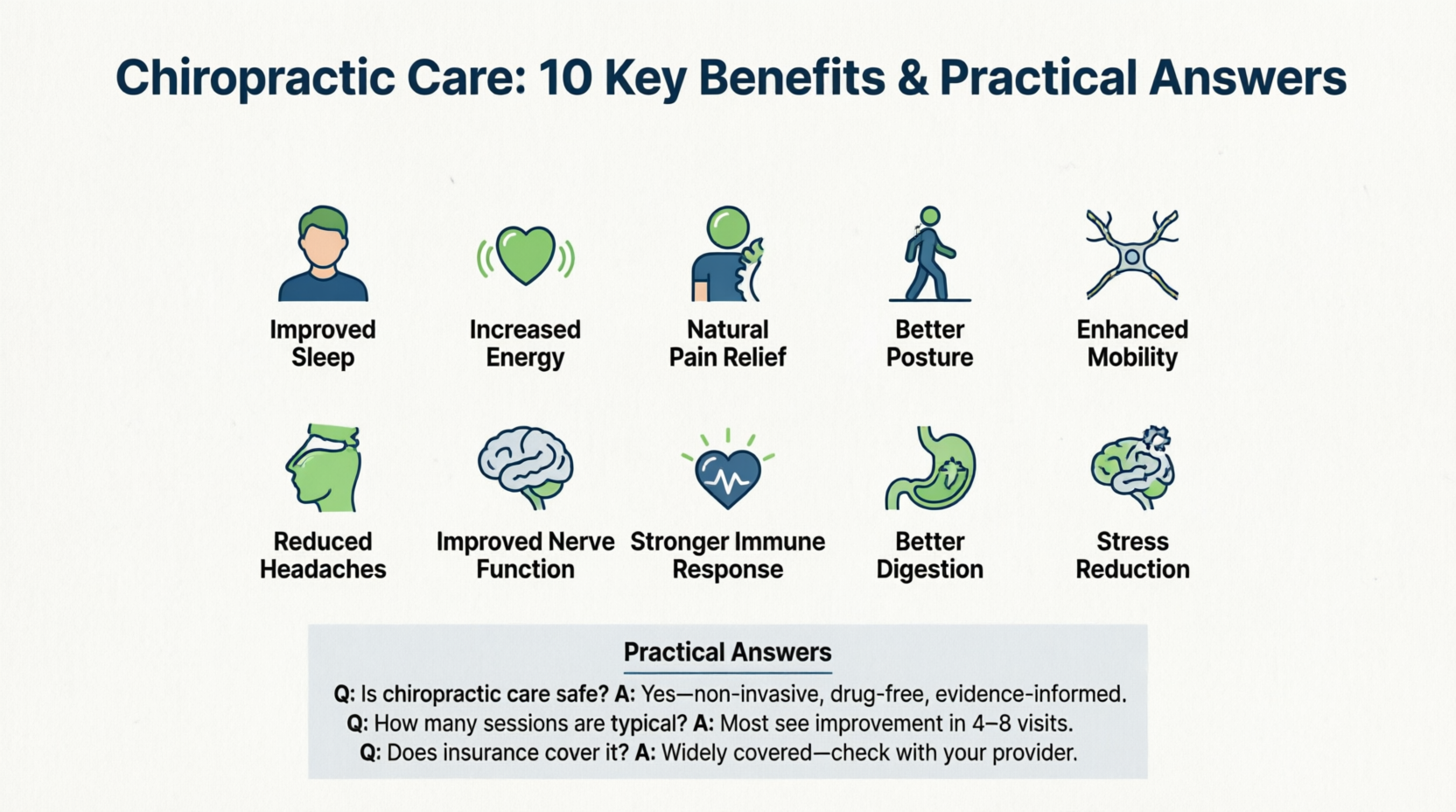
Explore the 10 key benefits and practical answers to help you decide if a body-mind tune-up is your next step toward better sleep, steadier energy, and lasting relief.
1. Relieve Muscle Tension and Stiffness
Chiropractic care effectively relieves muscle tension and stiffness by applying targeted spinal manipulation techniques to release physical tension throughout the musculoskeletal system.
Therapeutic interventions focus on tight areas like the neck, shoulders, and lower back. These regions often hold stress from daily activities and poor posture. Practitioners identify trigger points and apply pressure to promote muscle release.
Spinal manipulation involves gentle, controlled movements that realign vertebrae. This process reduces pressure on surrounding tissues and nerves. As spinal alignment improves, muscles can relax naturally without ongoing tightness.
Restoring spinal health creates sustainable pain relief over time. When the spine sits properly, the central nervous system functions better. This leads to reduced muscle guarding and improved overall movement patterns, which is a key benefit of seeking how chiropractic care can help you achieve wellness and health.
2. Improve Spinal Alignment and Posture
Spinal alignment correction through chiropractic care simultaneously improves posture and addresses spinal subluxations that compromise daily function. When vertebrae shift out of place, these misalignments create pressure on the nervous system. This pressure often triggers muscle tension that pulls the body out of its proper position.
Poor posture develops gradually as the body compensates for these subluxations. The spine curves unnaturally to accommodate misaligned vertebrae. Over time, this creates a cycle where misalignment leads to worse posture, which then creates more spinal stress.
Adjustment techniques work by gently guiding vertebrae back into proper position. This realignment reduces the physical tension that contributes to forward head posture and rounded shoulders. Regular sessions help retrain the body to maintain better positioning naturally.
Advantage Healthcare of Spartanburg focuses on achieving Peak Performance through targeted spinal manipulation. Her approach combines exact adjustments with posture training. This method addresses both the immediate misalignment issues and long-term habits that affect spinal health (you can explore how chiropractic care supports overall wellness and health through comprehensive spinal health strategies).
3. Reduce Stress-Induced Headaches
Stress-induced headaches diminish when spinal manipulation reduces the stress response and restores emotional balance in the central nervous system. Chronic stress creates ongoing muscle tightness in the neck and shoulders. This physical tightness often radiates upward and triggers tension headaches that can last for hours.
Chiropractic care targets the areas where stress manifests most strongly in your body. Spinal alignment adjustments release tight muscles and improve blood flow to the head region. Many patients report fewer headaches after receiving regular therapeutic intervention focused on their upper spine.
Spinal manipulation directly influences the central nervous system and its response to daily stressors. When your brain-body communication improves through consistent adjustments, the body handles pressure more effectively. This shift helps prevent the muscle tension that typically leads to stress headaches.
Experts recommend combining chiropractic adjustments with simple lifestyle counseling for better results. Your practitioner might suggest breathing exercises or posture correction techniques to practice between visits. These wellness strategies work together to support long-term headache relief and emotional balance.
4. Enhance Sleep Quality and Relaxation
Sleep quality improves when chiropractic care activates the relaxation response and stimulates the parasympathetic nervous system to regulate melatonin. This activation helps your body transition from stress mode into rest mode naturally. Many patients notice they fall asleep faster after their adjustment sessions.
The parasympathetic response supports your body's rest functions by slowing your heart rate and lowering blood pressure. When this system works properly, your body produces melatonin at the right times for better sleep cycles.Spinal alignment plays a key role in maintaining this balance throughout the night.
Autonomic nervous system balance affects how deeply you rest each evening. When your spine stays properly aligned, signals travel more smoothly between your brain and body. This improved brain-body communication helps you stay asleep longer without waking up frequently.
Stress reduction through regular adjustments can decrease the physical tension that disrupts sleep patterns. Less muscle tightness means fewer nighttime movements and position changes, especially when you're mindful of your sleep posture and pillow support. Your body learns to relax more completely when the nervous system receives consistent support from proper alignment.
5. Boost Circulation and Energy Flow
Chiropractic adjustments trigger endorphin release, which lowers cortisol levels and supports overall wellness by working alongside other treatments. Your nervous system responds to spinal manipulation by releasing these natural pain relievers throughout the body. This process helps reduce physical tension and supports better stress management overall.
Spinal alignment directly influences how your body manages stress hormones. When vertebrae shift out of position, they can irritate nerve pathways that control cortisol production. Regular adjustments help restore proper positioning and allow your system to regulate these hormones more effectively.
Chiropractic care works alongside other wellness strategies to create lasting results. Many people combine spinal manipulation with mindfulness practices to improve their relaxation response. This combined approach addresses both the physical and emotional aspects of chronic stress.
Proper blood flow supports the brain-body communication that affects your mood and energy levels. When spinal health improves through targeted adjustments, oxygen and nutrients reach tissues more efficiently. This natural process contributes to better sleep quality and emotional balance throughout your day.
6. Support Nervous System Balance
Nervous system balance emerges when chiropractic care harmonizes the central nervous system and optimizes brain-body communication. The sympathetic system handles your stress response while the parasympathetic system manages rest and digest functions. These two systems work together like a seesaw to keep your body running smoothly.
Regular adjustments help create better pathways between your brain and body. When your spine stays aligned, signals travel more clearly through your nervous system. This improved communication supports neuroplasticity, which means your nervous system can change and recover more effectively over time.
Think about how stress affects your daily routine. When tension builds in your back and neck, it sends constant alert signals to your brain. Spinal manipulation helps quiet these signals so your body can shift into relaxation mode more easily.
Chiropractic care supports this balance through several practical approaches. Posture correction reduces the physical strain that triggers stress responses. Spinal health treatments create space for nerves to work without interference. These changes help lower cortisol levels and encourage a calmer state throughout your day. For an extensive analysis of how chiropractic care enhances overall wellness, our comprehensive guide to chiropractic wellness explores these benefits in greater detail.
7. Alleviate Chronic Pain from Daily Stress
Chronic stress-related pain finds relief through holistic care that uses a patient-centered approach to address physical discomfort at its root. Daily pressure creates tension throughout the body. Tight muscles and poor posture often develop without notice.
Chiropractic care focuses on the connection between mental strain and physical symptoms. Spinal alignment helps ease pressure on nerves and muscles. Regular visits support the body's natural ability to handle stress.
Preventative care strategies include watching how stress shows up in the body. Small changes in daily habits can make a big difference over time. Patient-centered chiropractic helps catch issues before they become serious problems.
Spinal manipulation works with the nervous system to reduce overall tension. This approach addresses pain at its source rather than masking symptoms. Many people notice better movement and less stiffness after consistent care.
8. Promote Mind-Body Awareness
Mind-body connection strengthens when mindfulness practices connect with chiropractic wellness strategies to improve overall quality of life. Patients often notice their stress patterns become clearer during regular visits. This awareness helps them recognize tension before it builds.
Chiropractic care creates space for patients to tune into their bodies during each session. Spinal manipulation sessions encourage people to focus on breathing and notice how their muscles respond. These quiet moments during treatment become natural opportunities for mindfulness practices.
Practitioners often guide patients through simple awareness exercises while performing adjustments. Patients learn to identify which areas hold stress and how their posture affects their mood. This education helps people carry these skills into daily routines.
Self-care wellness strategies emerge naturally from these mindful treatment experiences. Patients learn breathing methods that relax their nervous system when they feel stressed. They also learn gentle stretches that address muscle tension in specific areas. This approach supports mental health and provides emotional support through wellness practices.
9. Encourage Emotional Release and Calm
Emotional release occurs naturally when Chiropractic Care supports hormonal balance and encourages mood enhancement through endorphin activity. Your body responds positively when spinal alignment improves brain-body communication and helps regulate stress hormones. This creates space for feeling calmer throughout the day while supporting posture improvement and immune support.
Spinal manipulation during sessions often triggers a relaxation response that reduces cortisol levels naturally through cortisol regulation. The parasympathetic response activates when tension in your central nervous system eases. Many people notice they feel less reactive to daily stressors after regular adjustments.
Practitioners provide emotional support by creating a calm environment where patients can discuss their stress response patterns. This patient-centered approach helps identify physical tension that may contribute to anxiety management challenges. Your provider may suggest lifestyle counseling to support these changes at home and promote self-empowerment.
Hormonal balance achieved through consistent care often leads to sustained mood enhancement over time. The mind-body connection strengthens when your musculoskeletal system functions better and physical discomfort decreases. This complete care method helps with both emotional stability and general health plans for consistent outcomes, including peak performance.
10. Complement Other Wellness Practices
Chiropractic adjustments work better together with lifestyle counseling and other ways to stay healthy. This integrated approach addresses both the physical and mental aspects of stress management. Advantage Healthcare of Spartanburg often works alongside other wellness providers to create coordinated care plans for their patients.
Spinal manipulation works well with mindfulness practices and movement therapies. When the spine stays in proper alignment, the central nervous system works better. This improved brain-body communication supports better emotional balance and reduces the physical tension that often accompanies daily stress. Related insight: How seasonal wellness approaches enhance stress management through chiropractic care.
Regular chiropractic care pairs naturally with massage therapy, yoga, and meditation routines. The adjustment techniques help release muscle tension while other practices focus on mental relaxation. Together these methods support the rest and digest response that counters chronic stress effects.
Lifestyle counseling through chiropractic offices often includes posture correction guidance and sleep quality recommendations. These patient-centered approaches help people develop consistent wellness strategies. The combination of spinal health maintenance with daily self-care habits creates lasting improvements in overall stress response and quality of life.
How Do Targeted Chiropractic Adjustments Help Unwind the Body-Mind Connection?
Targeted chiropractic adjustments unwind the body-mind connection by precisely applying spinal manipulation techniques that recalibrate the autonomic nervous system and encourage neuroplasticity across neural pathways.
Manual adjustment techniques work to balance sympathetic versus parasympathetic activity through specific contact points along the spine. The sympathetic nervous system controls fight or flight responses, while parasympathetic activity governs the rest and digest functions that promote recovery.
When spinal alignment improves through consistent adjustments, the central nervous system receives clearer signals from the musculoskeletal system. This improved brain-body communication helps reduce the chronic stress that keeps people stuck in heightened alert states.
Over time these adjustments create long-term neuroplastic changes in how the nervous system processes stress signals. Patients often notice better sleep quality and reduced physical tension as their bodies learn to maintain a healthier stress response naturally, with endorphins releasing during each session.
What Role Cryotherapy Play in Stress Recovery?
Cryotherapy helps lower stress by reducing cortisol levels and supports immune function as part of complete wellness plans.
Cryotherapy complements chiropractic adjustments by reducing inflammation throughout the body after spinal manipulation sessions. Cold therapy helps muscles release tension that builds up from chronic stress and poor posture correction habits.
The treatment impacts cortisol regulation by triggering the body's natural cooling response, which signals the nervous system to shift toward parasympathetic activity. This hormonal balance supports immune function and helps patients recover faster from daily stressors.
Integration within broader wellness strategies means combining cryotherapy sessions with adjustment techniques and lifestyle counseling. This complementary therapy approach addresses both the physical discomfort and emotional support needs that arise during stress recovery.
Who Can Benefit Most from Chiropractic Care for Stress?
Individuals with PTSD, chronic stress, or ongoing anxiety concerns benefit most from chiropractic care that addresses emotional balance in Spartanburg, SC.
Professionals under chronic stress often carry tension in their necks and shoulders from long hours at desks. These physical patterns create feedback loops that worsen mental health symptoms over time.
People with PTSD may hold trauma responses in their musculoskeletal system, creating ongoing pain and stiffness. Chiropractic care offers a patient-centered approach that addresses both the physical tension and emotional balance needs simultaneously.
Dr. Ven Korikov, DC tailors care plans for anxiety sufferers in Spartanburg, SC by assessing individual stress patterns and spinal health. His care approach includes posture improvement techniques and mindfulness practices that support long-term wellness and peak performance goals.
What Should You Expect During a Stress-Focused Adjustment Session?
A stress-focused adjustment session begins with an evaluation of spinal health based on the patient's needs, then applies specific adjustment techniques to trigger the relaxation response.
The intake process involves discussing current stress levels, sleep quality, and any physical discomfort areas. This helps practitioners understand how daily stressors affect spinal alignment and nervous system function.
Hands-on therapeutic intervention follows a sequence that starts with gentle muscle release techniques before moving to spinal manipulation. Each adjustment targets specific vertebrae to reduce interference in brain-body communication pathways.
The relaxation response builds as adjustments help shift the autonomic nervous system from sympathetic dominance toward parasympathetic activity. Patients often report feeling lighter and more centered as endorphin release occurs during and after the session.
How Often Should You Receive Adjustments for Optimal Results?
Optimal results come from a custom health plan that combines regular visits with prevention and lifestyle advice to improve daily living.
Frequency depends on your current stress levels, physical condition, and wellness goals. Some people benefit from weekly visits during high-stress periods, while others maintain progress with monthly appointments once their body adapts.
We incorporate preventative care strategies that extend beyond the adjustment table. This includes lifestyle counseling that addresses posture improvement, breathing techniques, and daily movement habits that support long-term spinal alignment.
Can Chiropractic Care Be Combined with Other Stress-Relief Therapies?
Chiropractic care works well together with other stress-relief therapies, strengthening the mind-body connection and improving overall treatment results.
Many patients find success pairing spinal adjustments with massage therapy, which helps release muscle tension that accumulates from chronic stress. Acupuncture works well alongside adjustments to support hormonal balance and promote relaxation response, especially for PTSD recovery.
Physical therapists often collaborate with chiropractors to create coordinated wellness strategies that address both musculoskeletal system issues and emotional balance. This collaborative approach accelerates recovery and peak performance.
The value of complementary therapy lies in treating the whole person rather than isolated symptoms. When practitioners work together, they create more effective therapeutic intervention plans that support both physical comfort and mental health.
Frequently Asked Questions
What is 'Stress Busters: Unwinding the Body-Mind Connection with Targeted Chiropractic Adjustments'?
Stress Busters: Unwinding the Body-Mind Connection with Targeted Chiropractic Adjustments combines specific chiropractic care with stress-reduction methods to help reduce physical tension and restore balance between the body and mind.
How does 'Stress Busters: Unwinding the Body-Mind Connection with Targeted Chiropractic Adjustments' work?
The program focuses on parts of the spine and nervous system that hold stress. It uses specific chiropractic adjustments to reduce tension, improve nerve function, and support the body's natural ability to relax.
Who can benefit from 'Stress Busters: Unwinding the Body-Mind Connection with Targeted Chiropractic Adjustments'?
Anyone experiencing chronic stress, muscle tightness, headaches, or poor sleep may benefit. The method is suitable for adults looking for a non-pharmaceutical way to manage daily pressures and improve overall well-being.
What should I expect during a 'Stress Busters: Unwinding the Body-Mind Connection with Targeted Chiropractic Adjustments' session?
A session typically begins with a brief assessment, followed by gentle, focused adjustments to key spinal segments. Patients often report immediate feelings of lightness, reduced muscle tightness, and a calmer mental state.
How many visits are usually needed for 'Stress Busters: Unwinding the Body-Mind Connection with Targeted Chiropractic Adjustments'?
Most individuals notice improvement within 4-6 visits; however, the exact number depends on stress levels and overall spinal health. A personalized plan is created after the initial evaluation.