
Rider's Roadmap: Chiropractic Strategies for E-Bike Enthusiasts Tackling SC Trails
The electric bike revolution has transformed how we explore South Carolina's breathtaking trails. From the rolling hills of the Blue Ridge Escarpment to the scenic paths of Paris Mountain State Park, e-bikes are opening up new possibilities for riders of all fitness levels. However, as more Upstate enthusiasts discover the joy of pedal-assisted adventure, a growing number are experiencing unique physical challenges that require specialized attention. Understanding how to maintain optimal spinal health while conquering SC's diverse terrain is essential for sustained riding enjoyment.
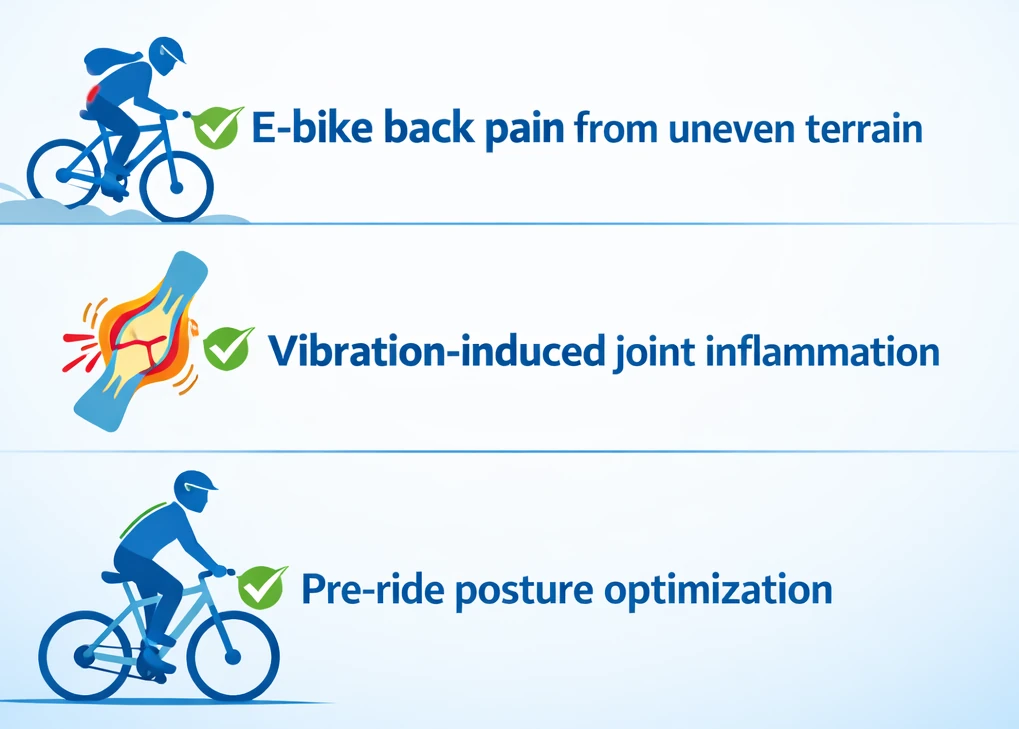
The Posture Puzzle: E-Bike Ergonomics and Spinal Health
Unlike traditional bicycles, e-bikes often feature different frame geometries, handlebar positions, and weight distributions that can significantly impact rider posture. Many e-bike enthusiasts unknowingly develop forward head posture and rounded shoulders from constantly checking displays or navigating technical trails. This unnatural positioning places excessive strain on the cervical spine and can lead to chronic e-bike back pain that diminishes riding pleasure.The key to preventing posture-related issues lies in proper bike fit and body awareness. When seated on your e-bike, your spine should maintain its natural curves with minimal forward lean. Handlebars should allow your elbows to remain slightly bent without requiring shoulder hunching. For Upstate trail riders navigating uneven terrain, this ergonomic foundation becomes even more critical as rough surfaces amplify poor posture effects.
Chiropractic care offers targeted solutions through spinal adjustments that restore proper alignment and reduce nerve interference. Regular chiropractic maintenance helps counteract the compressive forces that build up during long rides on South Carolina's challenging trails, from the rocky descents of Jones Gap to the rooty sections of Swamp Rabbit Trail extensions.
Key Prevention Tips for Spartanburg Riders:
- Get professional bike fitting at local Spartanburg bike shops
- Maintain natural spinal curves with minimal forward lean
- Position handlebars to allow slightly bent elbows without shoulder hunching
- Schedule regular chiropractic maintenance with leading Spartanburg chiropractor Dr. Korikov
Vibration Vigilance: Protecting Joints from Trail Trauma
South Carolina's off-road trails present a unique challenge: constant vibration transmission from rough terrain directly into the rider's skeletal system. While e-bikes provide pedal assistance, their heavier frames and powerful motors can actually increase vibration exposure compared to lighter traditional bikes. This persistent oscillation creates cumulative stress on joints, particularly in the spine, hips, knees, and wrists.
The human body wasn't designed to absorb hours of mechanical vibration. Over time, this repetitive stress can lead to microtrauma in joint tissues, accelerated disc degeneration, and inflammation that manifests as pain or reduced mobility. Trail riders tackling the varied surfaces of Upstate SC — from smooth gravel paths to technical singletrack — must be especially vigilant about vibration management.
Effective vibration mitigation starts with proper bike setup. High-quality suspension systems, both front and rear, significantly reduce transmitted forces. Wider tires run at appropriate pressures (typically 25-40 PSI for trail riding) act as natural shock absorbers. However, even the best equipment can't eliminate all vibration, making regular chiropractic care essential for maintaining joint integrity and preventing long-term damage.
Start with immediate post-ride stretching focusing on hip flexors, hamstrings, and thoracic spine mobility— areas that bear the brunt of trail riding demands. Hydration is crucial, especially during South Carolina's humid summer months when riders can lose significant electrolytes through sweat. Incorporate protein-rich foods within 30 minutes of completing your ride to support muscle repair.
For deeper recovery, consider foam rolling major muscle groups two to three times weekly, paying special attention to glutes and quadriceps that stabilize the pelvis during technical descents. Cold immersion therapy can help reduce inflammation after particularly grueling rides on trails like the challenging sections of Caesars Head State Park. Most importantly, listen to your body — persistent pain beyond normal muscle soreness warrants professional evaluation.
Proper footwear matters more than many riders realize. Stiff-soled mountain bike shoes transfer power efficiently while reducing foot fatigue on long rides. Consider padded cycling shorts with quality chamois padding — this simple investment prevents saddle discomfort that can alter your riding posture and contribute to lower back strain.
The human body wasn't designed to absorb hours of mechanical vibration. Over time, this repetitive stress can lead to microtrauma in joint tissues, accelerated disc degeneration, and inflammation that manifests as pain or reduced mobility. Trail riders tackling the varied surfaces of Upstate SC — from smooth gravel paths to technical singletrack — must be especially vigilant about vibration management.
Effective vibration mitigation starts with proper bike setup. High-quality suspension systems, both front and rear, significantly reduce transmitted forces. Wider tires run at appropriate pressures (typically 25-40 PSI for trail riding) act as natural shock absorbers. However, even the best equipment can't eliminate all vibration, making regular chiropractic care essential for maintaining joint integrity and preventing long-term damage.
Recovery Rituals: Post-Ride Restoration for Upstate Adventurers
The physical demands of e-bike trail riding in South Carolina's Upstate region require thoughtful recovry strategies. Unlike road cycling, off-road adventures involve constant core engagement, dynamic weight shifting, and unexpected impacts that fatigue muscles differently. Implementing proper recovery protocols can mean the difference between soreness that fades overnight and injuries that sideline you for weeks.Start with immediate post-ride stretching focusing on hip flexors, hamstrings, and thoracic spine mobility— areas that bear the brunt of trail riding demands. Hydration is crucial, especially during South Carolina's humid summer months when riders can lose significant electrolytes through sweat. Incorporate protein-rich foods within 30 minutes of completing your ride to support muscle repair.
For deeper recovery, consider foam rolling major muscle groups two to three times weekly, paying special attention to glutes and quadriceps that stabilize the pelvis during technical descents. Cold immersion therapy can help reduce inflammation after particularly grueling rides on trails like the challenging sections of Caesars Head State Park. Most importantly, listen to your body — persistent pain beyond normal muscle soreness warrants professional evaluation.
Essential Gear: Protection and Prevention on SC Trails
Investing in the right equipment isn't just about performance — it's about preserving your body for countless future adventures. Quality suspension components should be your first priority; a good front fork with 100-120mm of travel and rear shock (for full-suspension bikes) dramatically reduces spinal compression. Ergonomic grips with vibration-dampening materials help protect wrists and elbows from trail chatter.Proper footwear matters more than many riders realize. Stiff-soled mountain bike shoes transfer power efficiently while reducing foot fatigue on long rides. Consider padded cycling shorts with quality chamois padding — this simple investment prevents saddle discomfort that can alter your riding posture and contribute to lower back strain.
Don't overlook the importance of a properly fitted helmet with MIPS technology for rotational impact protection, especially when navigating South Carolina's technical trails. Hydration packs with supportive harness systems distribute weight evenly across your shoulders and back, preventing the postural distortions that heavy, poorly positioned packs can cause.
Your Chiropractic Advantage: Dr. Korikov and Spartanburg Spinal Health
For e-bike enthusiasts serious about maintaining peak performance on South Carolina trails, proactive chiropractic care isn't just remedial — it's strategic. Dr. Korikov, DC at Advantage Healthcare of Spartanburg Chiropractic clinic specializes in treating the unique musculoskeletal challenges faced by modern cyclists. His approach combines precise spinal adjustments with therapeutic modalities designed specifically for vibration-related injuries and posture correction.Dr. Korikov understands that chiropractic for cyclists requires more than generic adjustments. His treatment protocols address the specific stress patterns created by e-bike riding, including targeted work on sacroiliac joints that bear significant load during climbing, and cervical spine techniques that counteract forward head posture from handlebar positioning. His clinic's focus on South Carolina trail riding health means he tailors recovery programs to the specific demands of local terrain and riding conditions.
Whether you're experiencing nagging e-bike back pain after exploring the trails around Lake Keowee or want to optimize your performance before tackling the demanding routes of the Blue Ridge Mountains, Dr. Korikov's expertise can help you ride stronger and longer. His comprehensive assessments identify underlying issues before they become debilitating problems, allowing you to focus on the joy of exploration rather than physical limitations.
The future of e-bike trail riding in South Carolina's Upstate region is bright, but it requires smart preparation and ongoing body maintenance. By addressing posture challenges, managing vibration exposure, implementing thoughtful recovery strategies, and investing in proper gear, riders can unlock countless adventures on the region's spectacular trails. And when physical challenges arise — as they inevitably do in any athletic pursuit — specialized chiropractic care offers the fastest path back to the trails you love.
Don't let preventable discomfort sideline your riding season. Contact Dr. Korikov today at Advantage Healthcare of Spartanburg to schedule your consultation and discover how personalized chiropractic care can transform your e-bike trail experience. Your spine — and your riding partners — will thank you for years to come.
Enjoy your Upstate South Caroline and Spartanburg area bike trail rides!
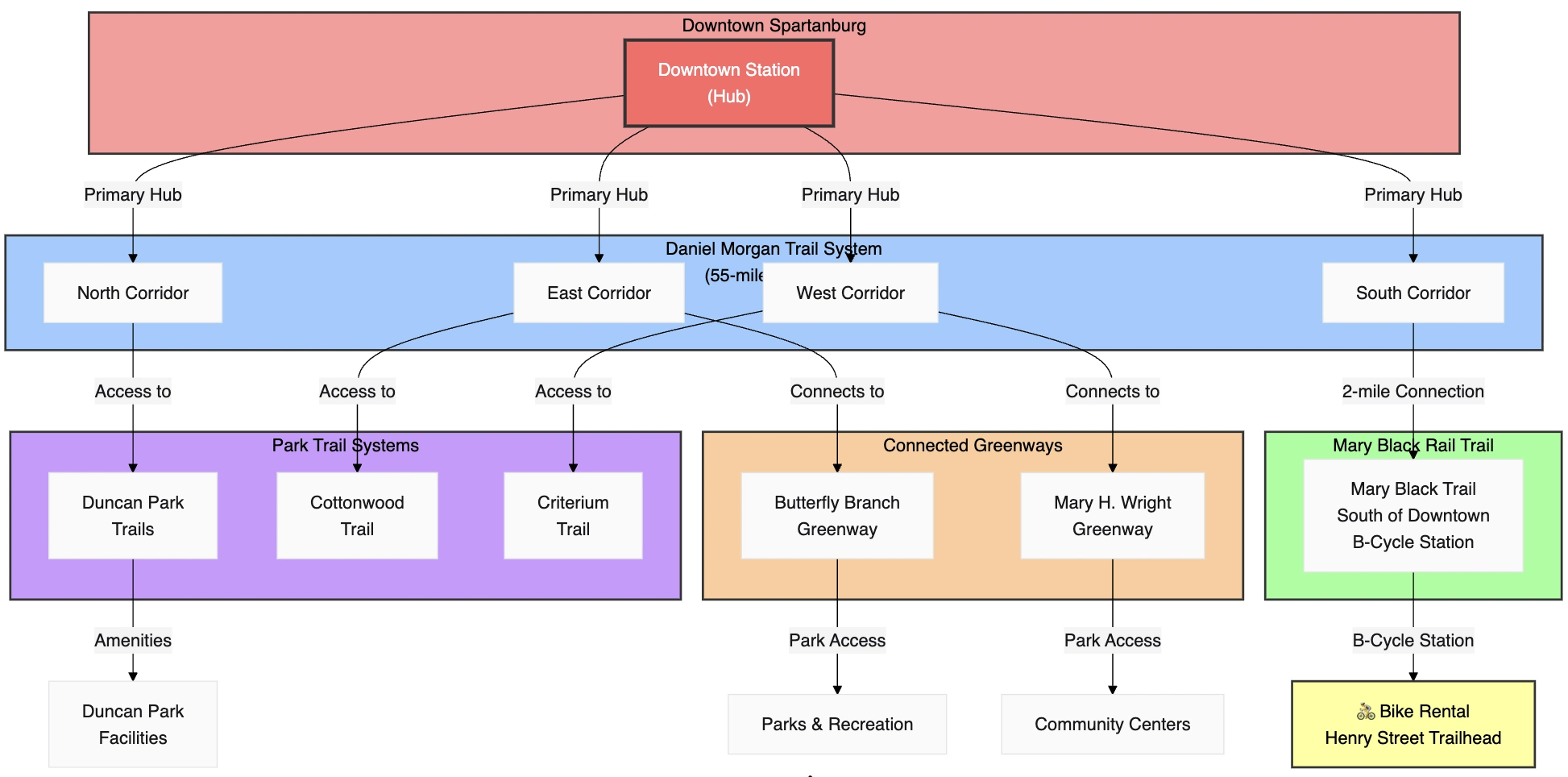
Spartanburg Bike Trails Scheme
Spartanburg Bike Trails – Difficulty and Distance Overview
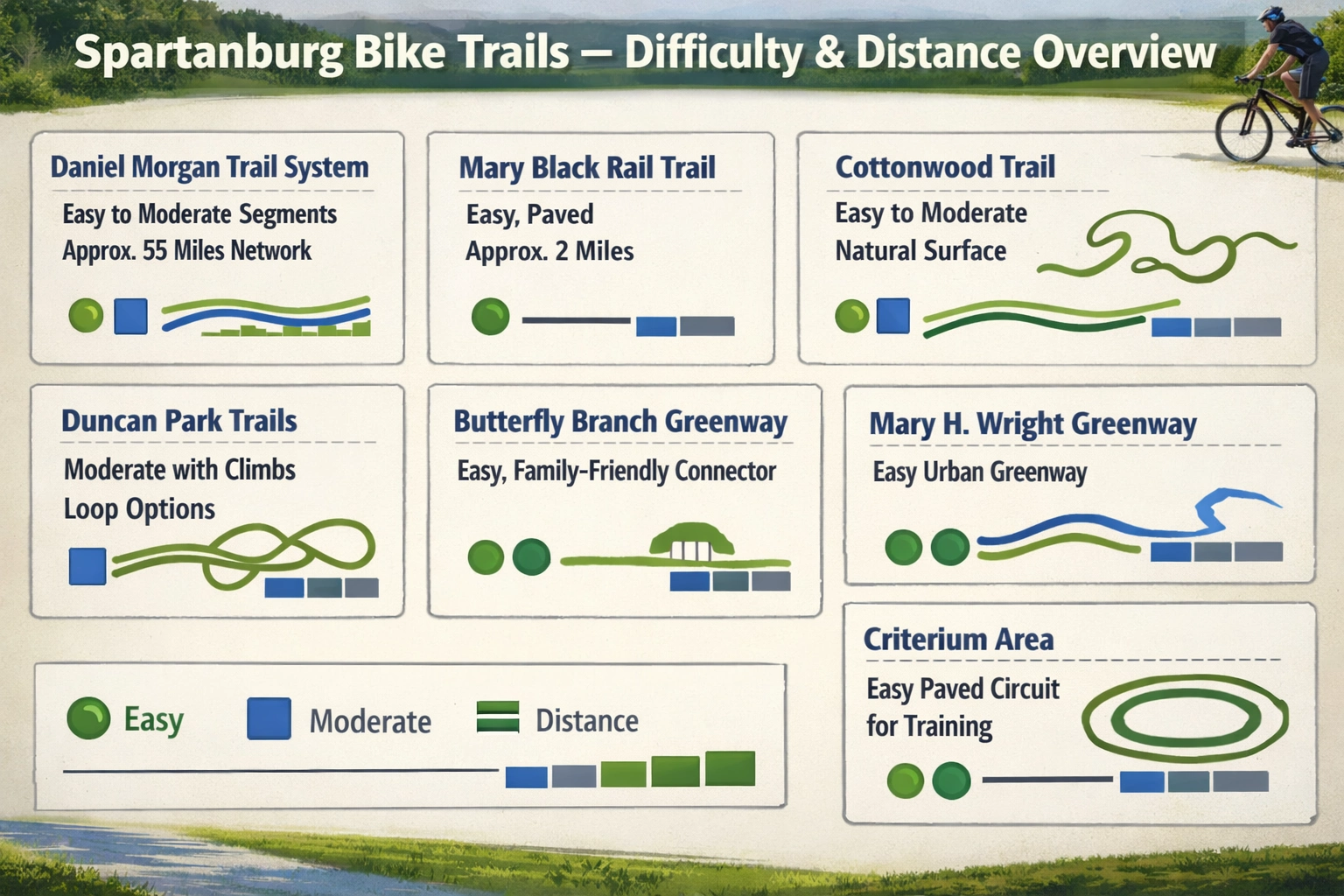
Here's a detailed text/table version of the Spartanburg bike trails with approximate distances and difficulty ratings:
Spartanburg Bike Trails Guide
Daniel Morgan Trail SystemDistance:55 mi network
Difficulty:Easy to Moderate
Surface:Mixed
Best For:Long-distance touring
Mary Black Rail Trail
Distance:2 mi
Difficulty:Easy
Surface:Paved
Best For:Beginners, families, B-Cycle rentals
Butterfly Branch Greenway
Distance:3-5 mi
Difficulty:Easy
Surface:Paved
Best For:Family-friendly, casual
Mary H. Wright Greenway
Distance:2-4 mi
Difficulty:Easy
Surface:Paved
Best For:Urban commuting, casual
Cottonwood Trail
Distance:4-6 mi
Difficulty:Easy to Moderate
Surface:Natural
Best For:Mountain biking, intermediate
Duncan Park Trails
Distance:3-8 mi loops
Difficulty:Moderate
Surface:Mixed
Best For:Recreational, elevation gain
Criterium Trail
Distance:1-3 mi
Difficulty:Easy
Surface:Paved
Best For:Training, speed work
SC Trail Difficulty Rating Guide:
- Easy: Flat to rolling terrain, paved surfaces, suitable for all ages and fitness levels
- Moderate: Some elevation changes, mixed terrain, requires basic fitness and bike handling skills
- Difficult: Significant elevation gain, technical terrain, advanced riders recommended
- For Beginners/Families: Start with Mary Black Rail Trail (2 mi), Butterfly Branch Greenway (3-5 mi), or Mary H. Wright Greenway (2-4 mi)
- For Intermediate Riders: Try Cottonwood Trail (4-6 mi) or Duncan Park Trails (3-8 mi)
- For Long Rides: Explore segments of the Daniel Morgan Trail System (55 mi total network)
- For Training: Use the Criterium Trail for speed work and interval training