
Sciatica Treatment in Spartanburg, SC
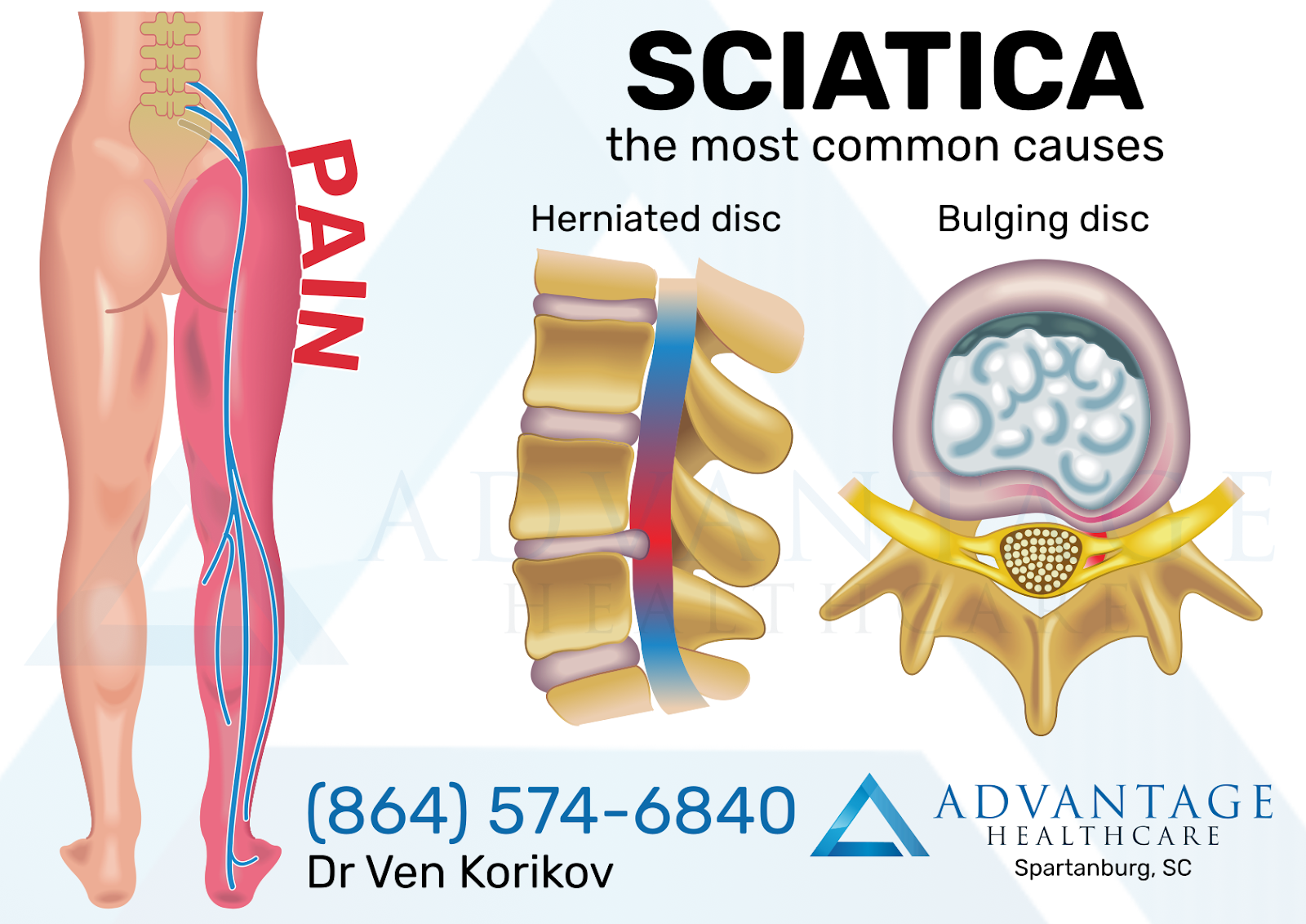
Sciatica is pain that travels from the lower back or buttock down the back of the leg, along the sciatic nerve. The pain usually runs down the back of the leg and can reach the calf or the foot. It is not caused by the nerve itself — it is a symptom of something pressing or irritating that nerve, most often a disc problem in the lower back.At Advantage Healthcare of Spartanburg, Dr. Ven Korikov, DC treats sciatica with spinal adjustments, manual therapy and targeted rehab — without pain medication and without surgery.
Call (864) 574-6840 · Same-day appointments
Mon, Tue, Thu 7:30 AM–7:00 PM;
Wed, Fri 7:30 AM–1:00 PM.
What is sciatica?
Sciatica is a set of symptoms, not a diagnosis. The nerve itself is healthy; something is pressing on it where it leaves the spine.The most common cause is a disc in the lower back bulging or slipping and contacting the nerve root. Other causes include spinal stenosis (a narrowing of the spinal canal), a bone spur, a pinched nerve from prolonged sitting, and – less commonly – pregnancy-related pressure on the lower back.
Common Sciatica Symptoms:
- Pain running from the lower back or buttock down the back of one leg
- Tingling or numbness in the leg, foot or toes
- Weakness in the leg or difficulty lifting the foot
- Pain that worsens with sitting, standing or coughing
- Pain that is usually worse on one side
Sciatica typically affects one leg. Pain in both legs, or pain that comes with a sudden loss of bladder or bowel control, is a medical emergency — not a chiropractic case. We refer those out immediately.
Who gets sciatica?
We see sciatica most often in these groups:- Adults 30-60, with the highest incidence between 35 and 55
- People who sit for long hours, like desk work, driving, warehouse or office jobs
- People who lift, twist or reach for years without conditioning their back
- Pregnant patients, particularly in the third trimester
- Athletes and weekend athletes whose training loads spike quickly
Anyone under 40 with severe back pain - younger patients more often have a disc problem than a degenerative one, and we image more carefully in that group
No course of care is promised here. What we do promise is a full assessment, a plain explanation of what we find, and a treatment plan you can accept or decline.
What happens on your first visit?
Your first appointment at Advantage Healthcare runs about 45 to 60 minutes. Here is what it covers:- Your history — where the pain starts, what makes it worse, whether it travels, what you have already tried
- Physical examination — range of motion, reflexes, strength, and neurological testing
- X-ray taken on site, typically $10, to check bone structure and alignment
- Your findings, in plain language — what we think is causing your symptoms and what we propose to do about it
- Your questions – including cost, how many visits you would need, and what happens if chiropractic care is not the right answer for you
Before you arrive: complete our first visit and insurance details. If you are a Medicare or insurance patient, bring your card.
How Dr. Korikov treats sciatica
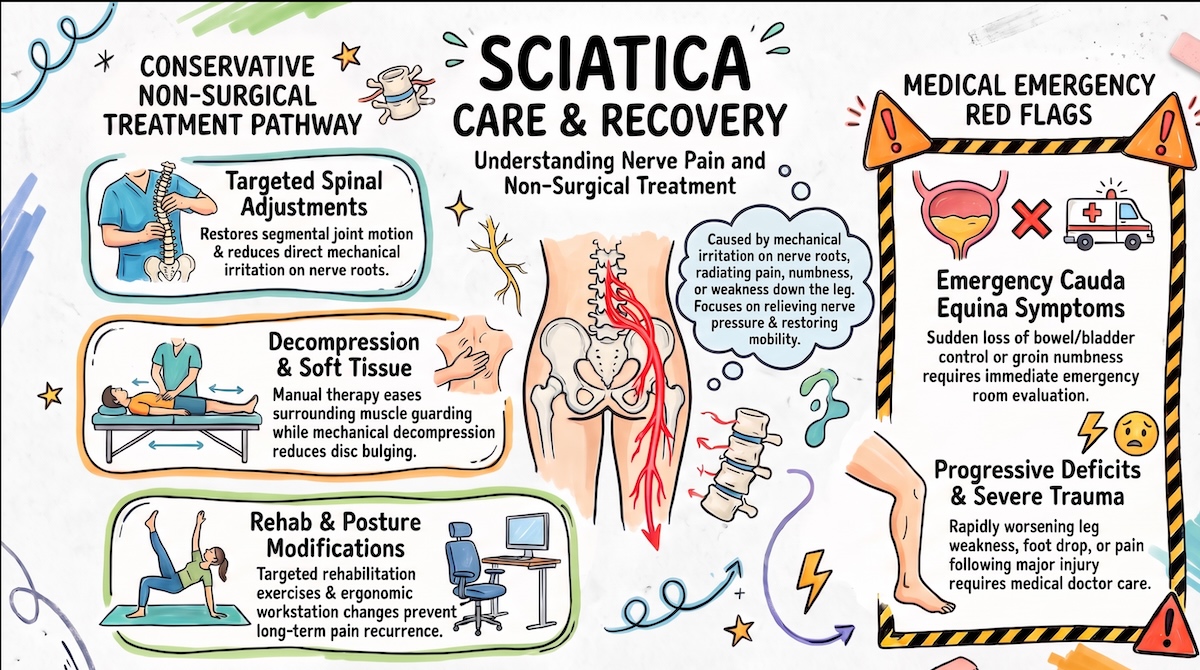
Treatment is built around relieving nerve pressure, then restoring movement. Dr. Korikov does not treat every sciatica case the same way — the approach depends on what the examination and imaging show.- Spinal adjustments — targeted spinal manipulation to restore motion to the affected segment and reduce the irritation on the nerve root. This is the core of chiropractic care for sciatica.
- Manual therapy and soft tissue work — massage and myofascial technique to ease the muscle guarding that builds up around a painful lower back, which often makes the nerve pain worse.
- Machine-assisted therapy — including mechanical decompression, which creates negative pressure along the spine to reduce disc bulge and improve mobility in the segments above the problem.
- Rehabilitation and home exercises — the part that keeps the improvement. You leave with specific exercises and a schedule. Without them, most sciatica returns within a few months.
- Lifestyle and workstation changes — how you sit, how you lift, how you sleep, and what is driving the posture that caused the problem.
When you should see a doctor (MD) instead
Chiropractic care is not the right first step for every back problem. See your medical doctor, or go to an emergency department, if you have any of the following:- New loss of bladder or bowel control, or numbness around the groin or inner thighs — this can signal cauda equina syndrome and requires emergency care
- Progressive weakness in one leg or foot, or difficulty lifting your foot or standing on your toes
- Severe pain following a fall, a car accident, or any significant injury
- Back pain with fever, unexplained weight loss, or a history of cancer
- Numbness that is worsening over days rather than weeks
- Pain that has not improved after 4 to 6 weeks of conservative care
We will refer you to the appropriate medical provider when any of these apply. Getting the right diagnosis first is more important than treating the wrong problem quickly.
Meet Dr. Ven Korikov, DC
Dr. Korikov leads the clinical team at Advantage Healthcare of Spartanburg which has over 30 years of combined chiropractic experience. He is known for explaining his findings to patients in plain language rather than clinical shorthand, and for taking time to answer questions at every visit.His approach treats the whole picture — posture, work environment, movement habits, and nutrition — rather than treating a single symptom in isolation.
Read more about Dr. Korikov's approach →
Reviewed by Dr. Ven Korikov, DC — November 2026
What does sciatica treatment cost?
Most patients at Advantage Healthcare use insurance.Insurance accepted: Call (864) 574-6840 with your plan details and we will confirm your coverage before your visit.
Same-day appointments are available. Call and we will do our best to get you seen today.
Book your sciatica appointment
Spartanburg · Mon, Tue, Thu 7:30 AM–7:00 PM; Wed, Fri 7:30 AM–1:00 PMCall (864) 574-6840 — tap to call from your phone.
1205 John B White Sr Blvd, Spartanburg, SC 29306-3929